 One Tank of Gas
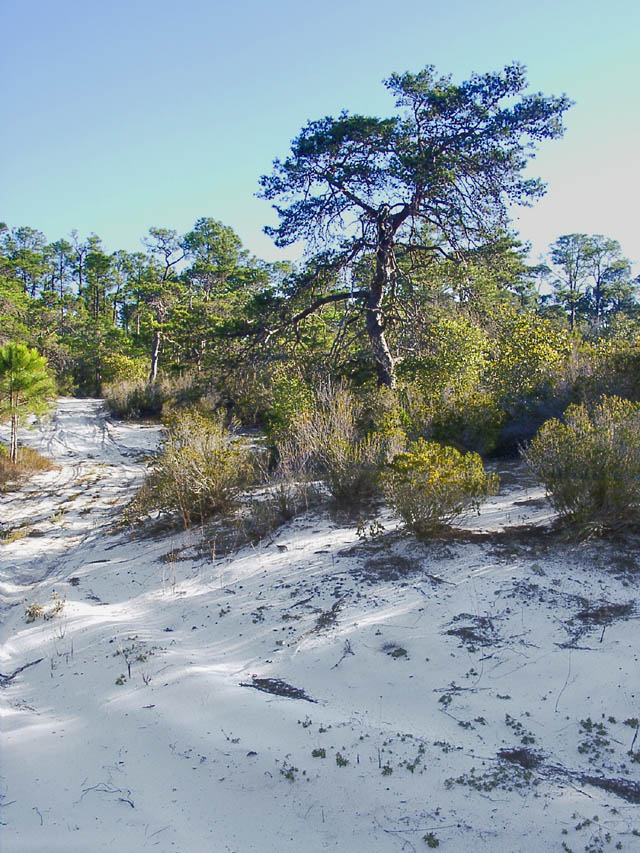
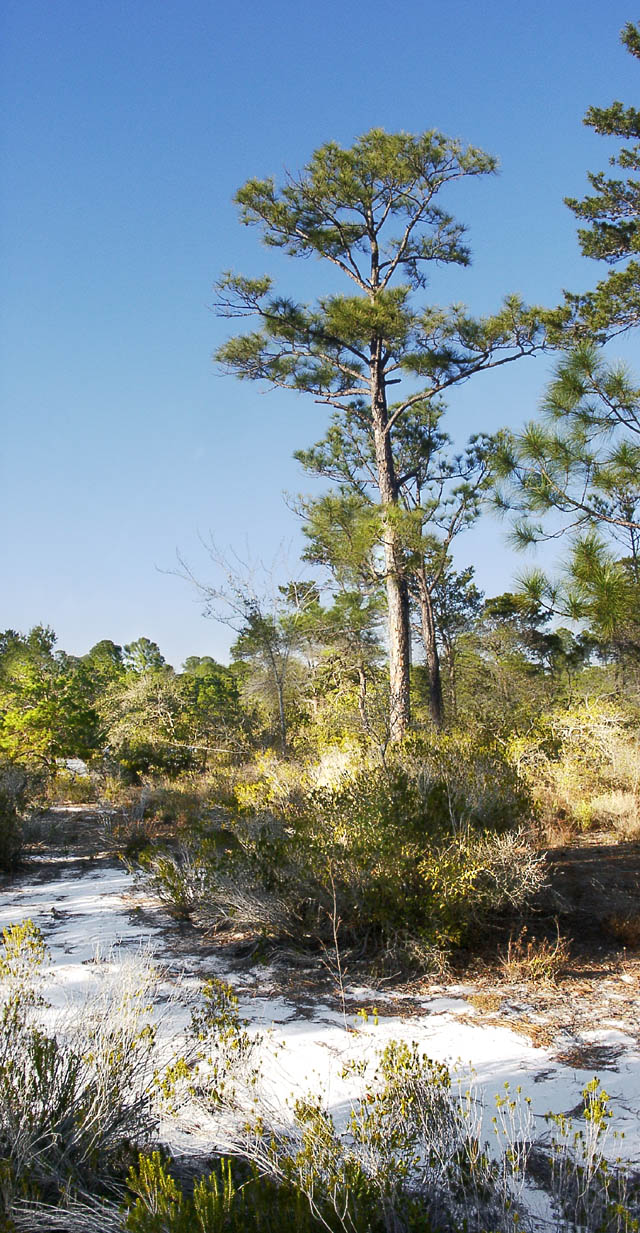
The pine barrens is an area adjoining the gulf-side dunes. It is an undisturbed example of a sand pine scrub forest which is an exceedingly dry, sandy community with a rather sparse understory of shrubby, evergreen oaks and an overstory of its namesake, sand pine. During the late Pleistocene, when conditions were drier, scrub may have dominated much of the Florida peninsula. (Source: Gil Nelson, "Exploring Wild Northwest Florida: A Guide to Finding the Natural Areas and Wildlife of the Panhandle." ISBN 1-56164-086-7.)
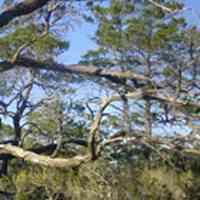
Big Lagoon State Park:
Pine Barrens
Big Lagoon State Park: Pine Barrens
-
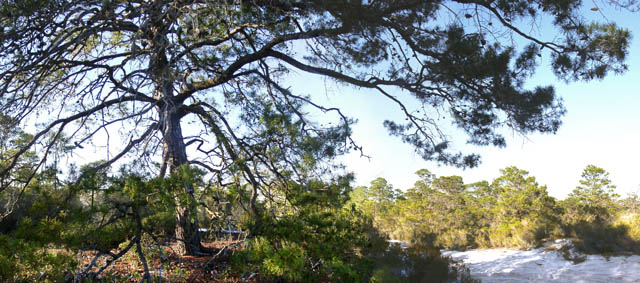
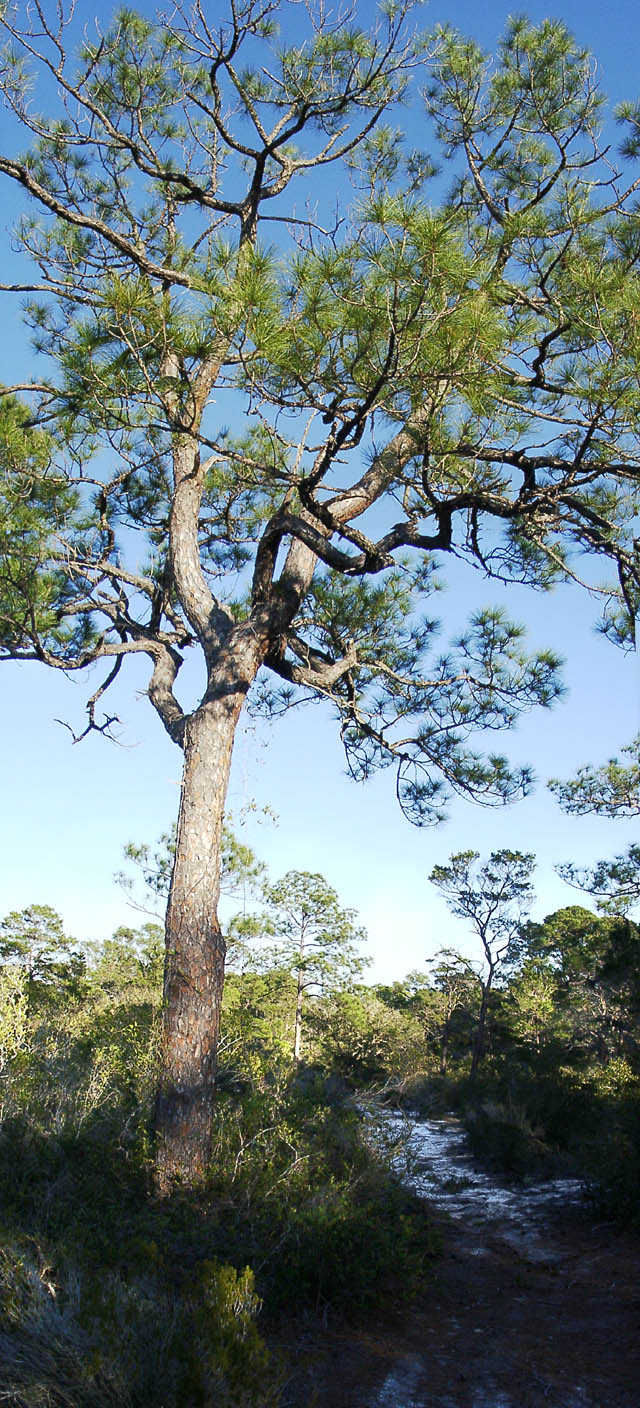
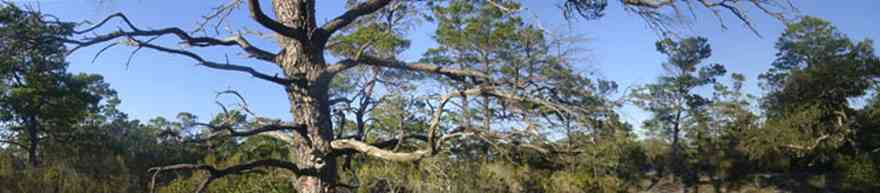 The sand scrub pine trees have odd and twisted shapes.
 -
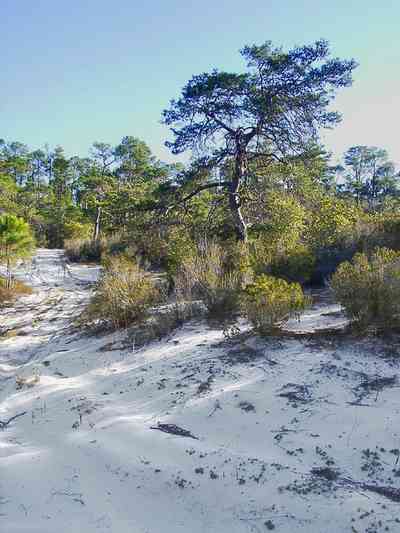 Barrier beaches are one of the world's most restless landforms. As can be seen above the tress are growing on shifting sand which looks like snow.
 -
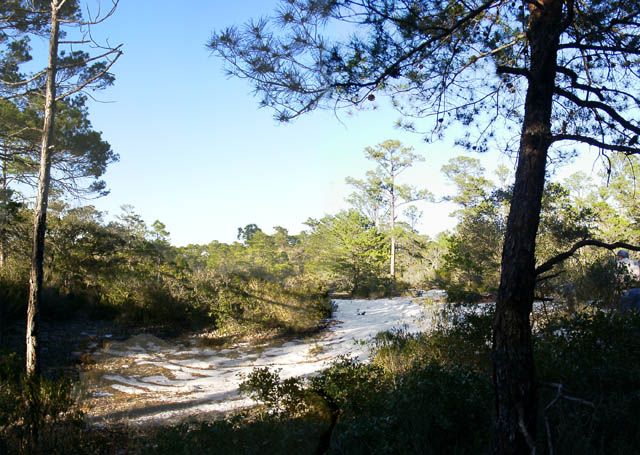
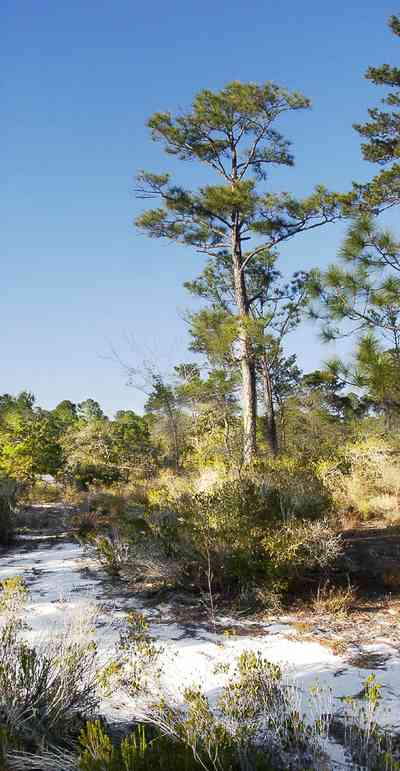 The sand pine forest is located on the sound side of the key on older dunes.
 -
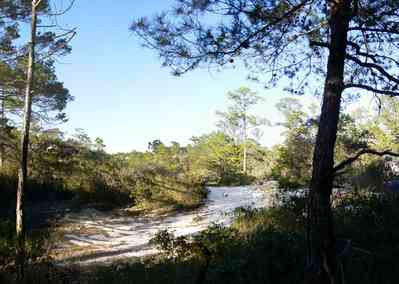 Ridges of old dunes form hills and valleys through the forest.
 -
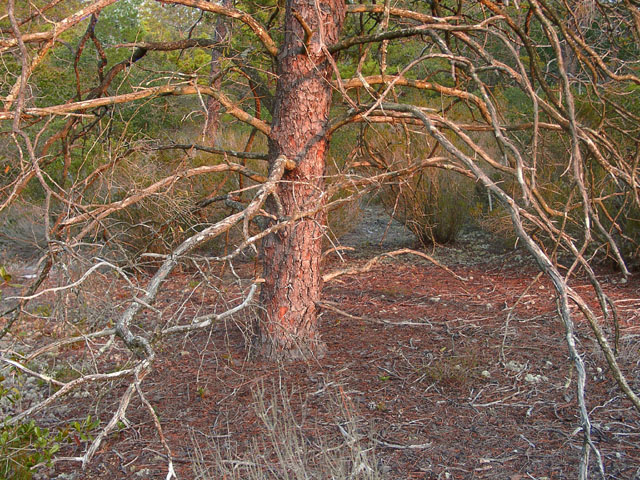
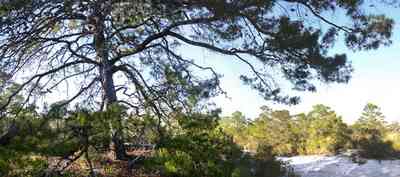 In contrast to the species of pine shown below, the sand pine is much shorter. Its form can be twisted with lower branches growing close to the ground.
 -
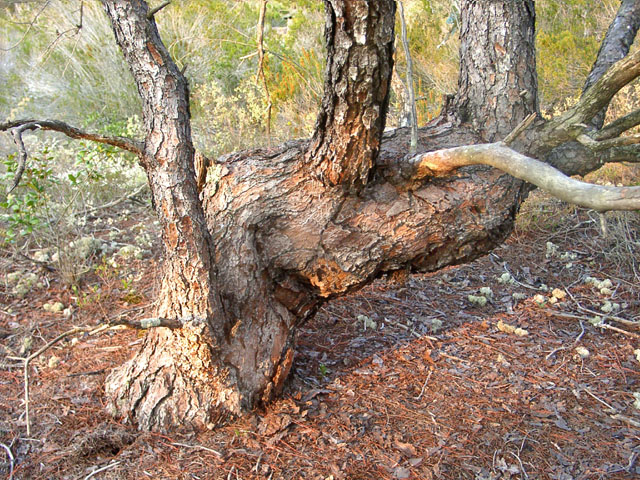
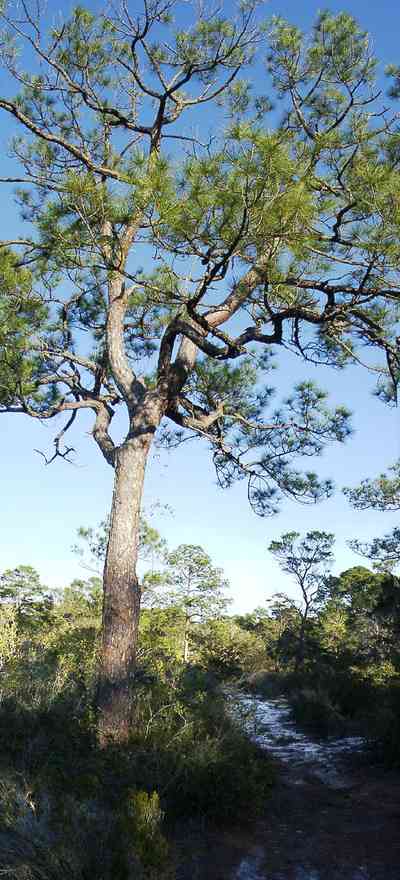 The overstory in some locations is composed of an older growth of short-leafed pine tree.
 -
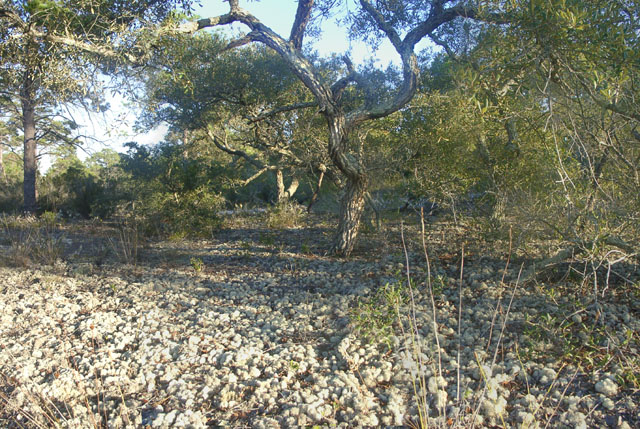
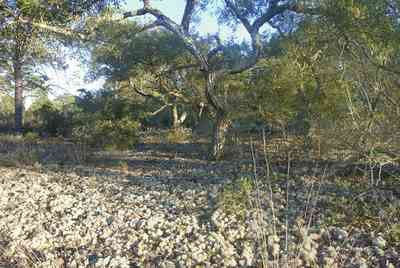 A myrtle oak is surrounded by a lichen ground cover.
 -
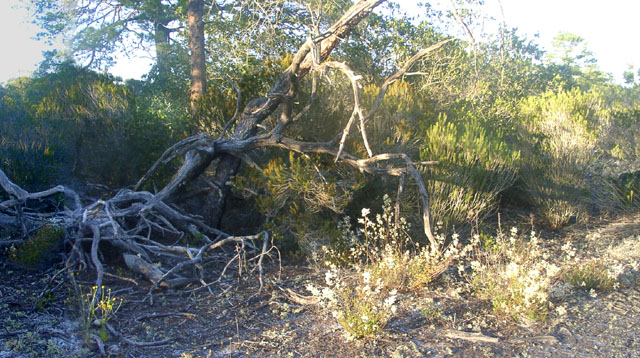
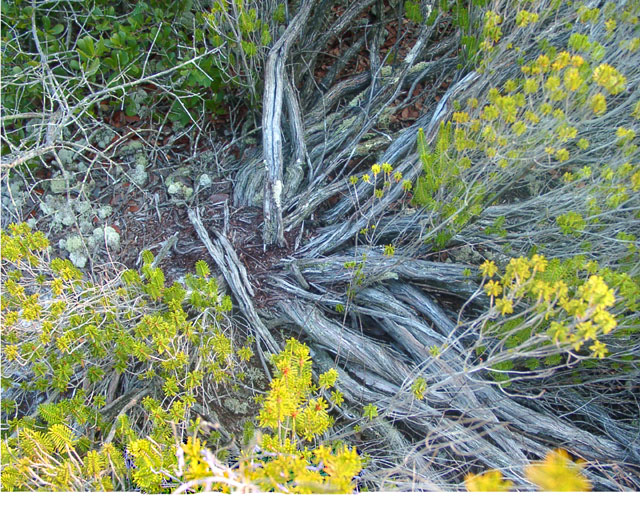
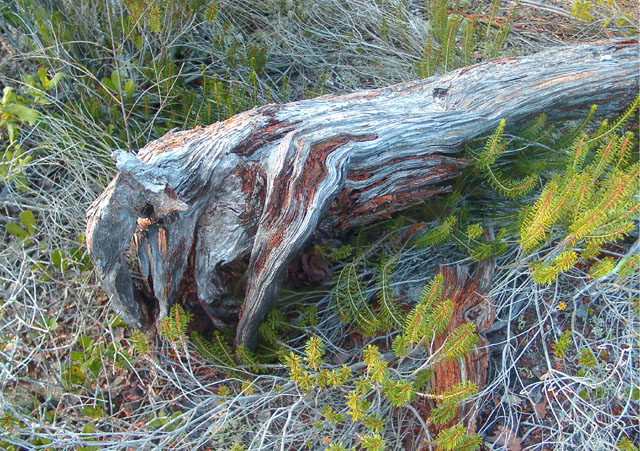
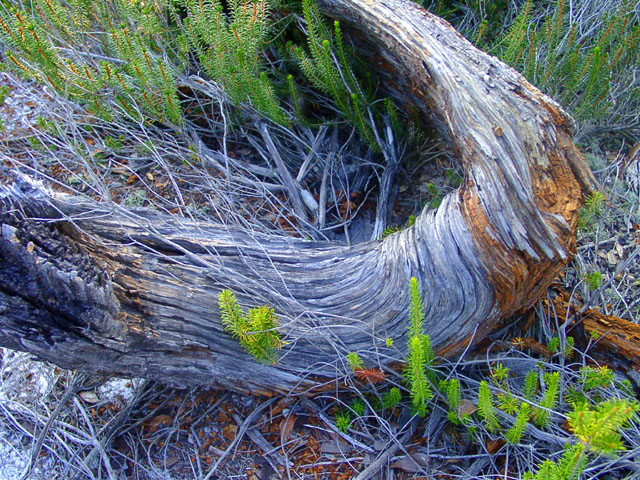
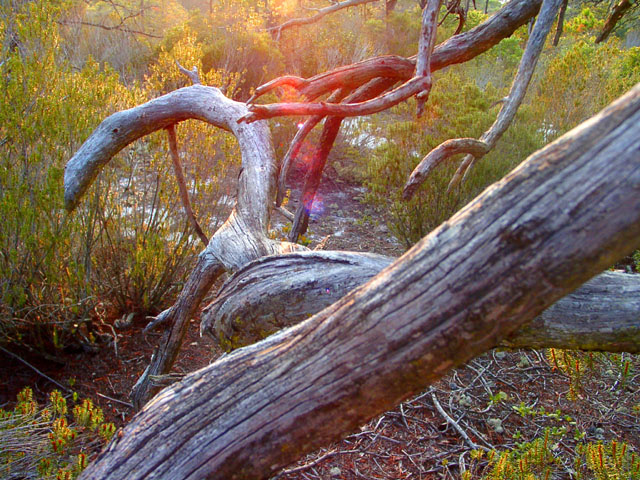
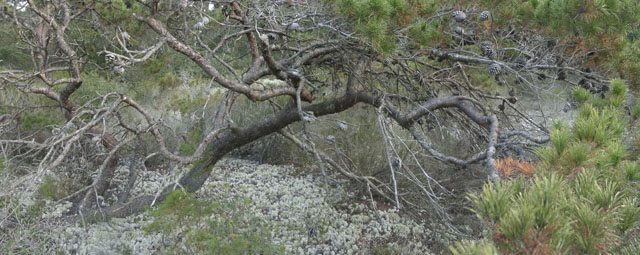
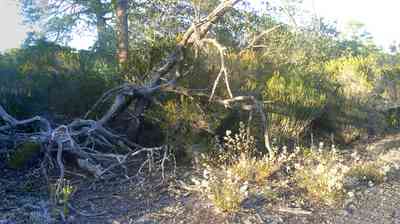 Twisted shapes of dead scrub pines litter the forest floor.
 -
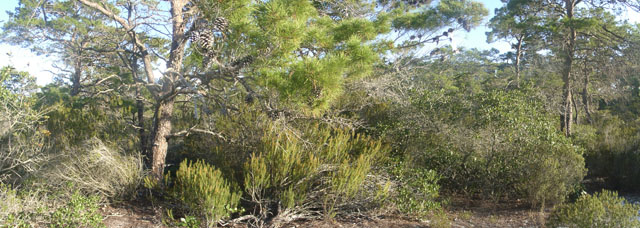
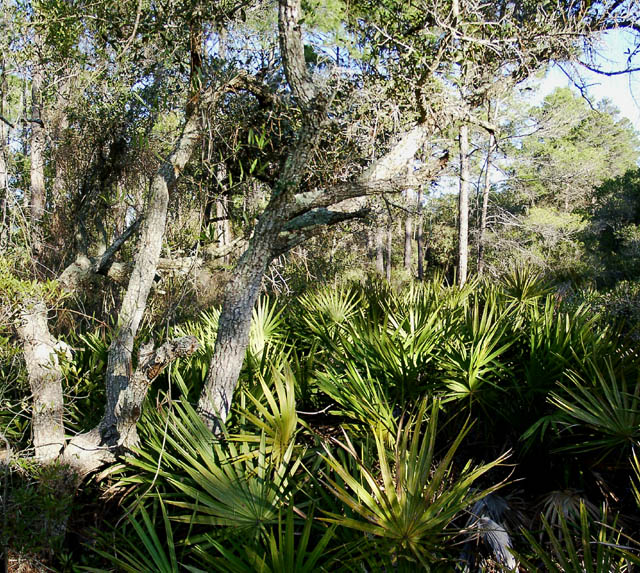
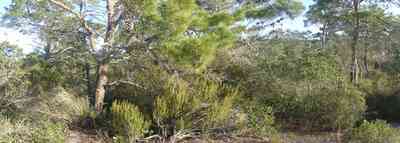 The forest supports a variety of plants and trees in a typical open coastal wood.
 -
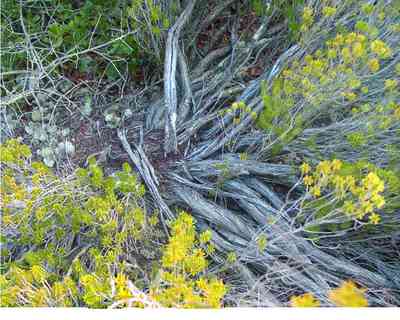 Florida rosemary is a sand-loving evergreen shrub.
 -
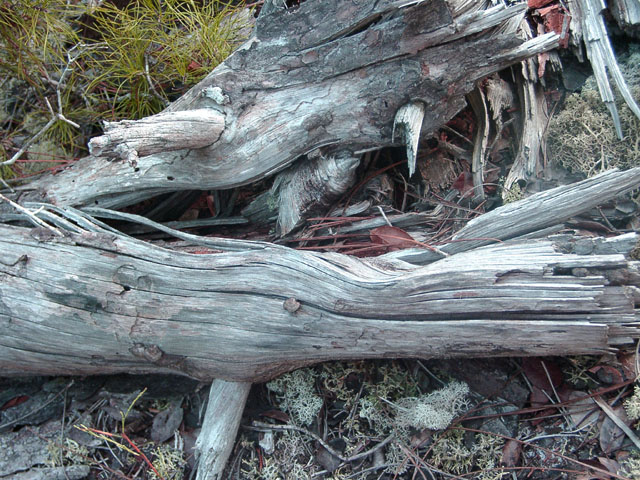
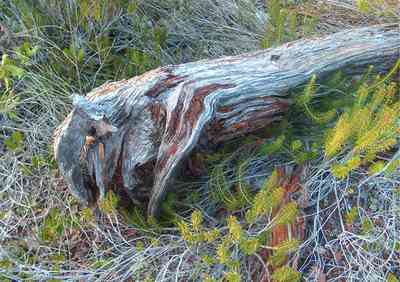 Pine stumps decay slowly on the dry sandy forest floor.
 -
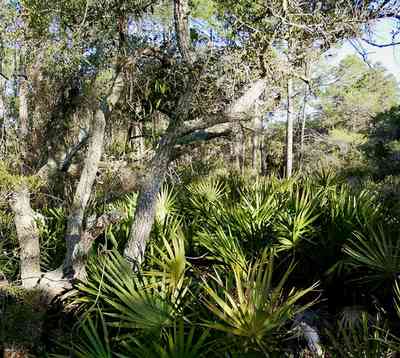 Saw palmettos form a dense groundcover in part of this forest community.
 -
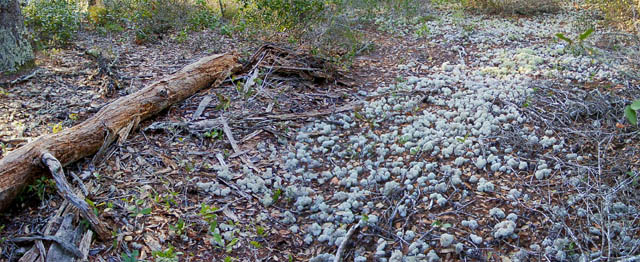
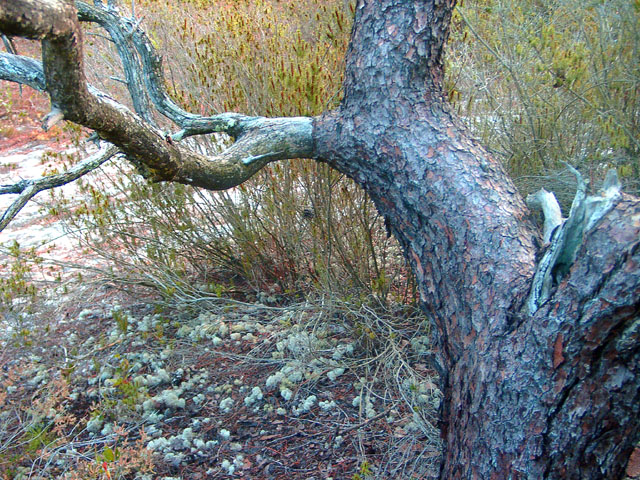
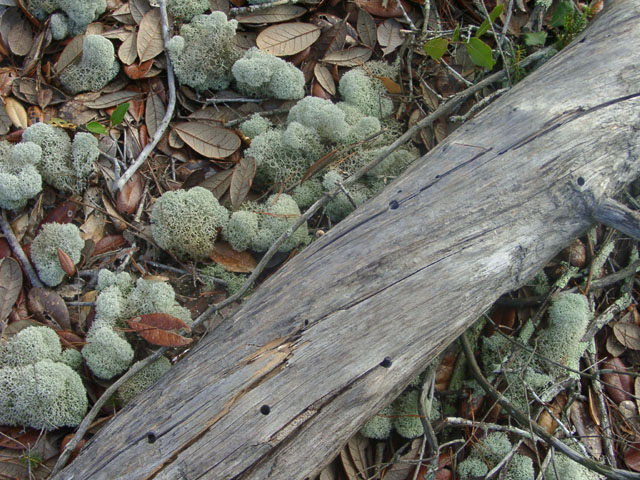
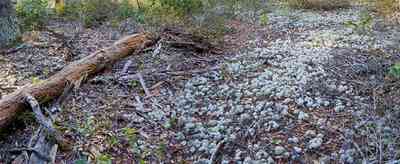 A variety of lichen and moss are the most common ground cover.
 -
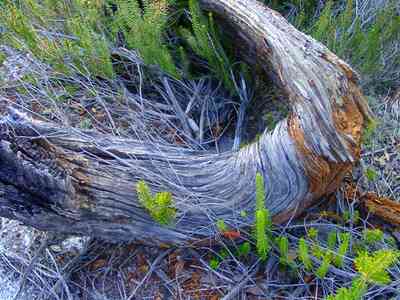 Pieces of pine scrub trees decay slowly because of the high content of sap.
 -
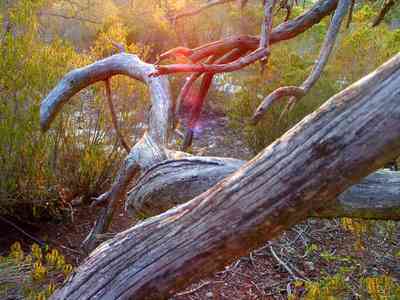 The shapes of the dead pine trees form a natural barrier in the undergrowth of Florida rosemary.
 -
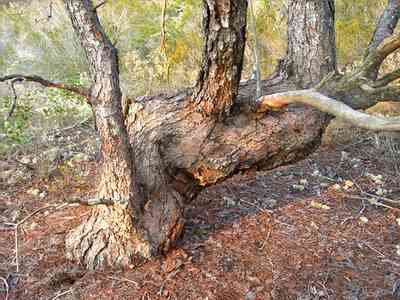 The trunks of the sand pine trees twist and turn into bizarre shapes.
 -
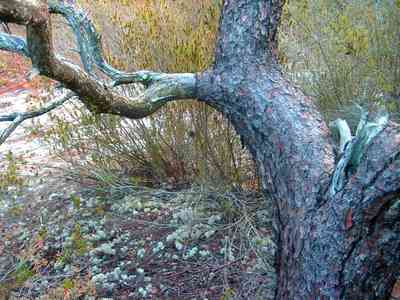 The colors of Florida rosemary compliments the green lichens and mosses.
 -
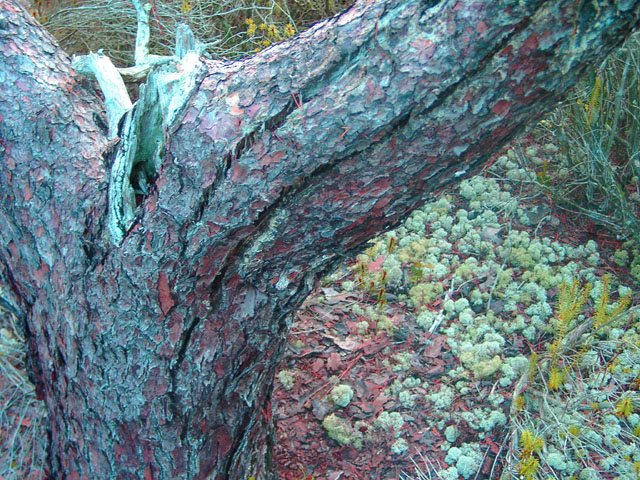
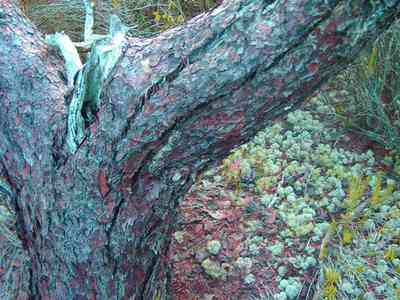 Lichens and mosses grown on the scrub pine trucks.
 -
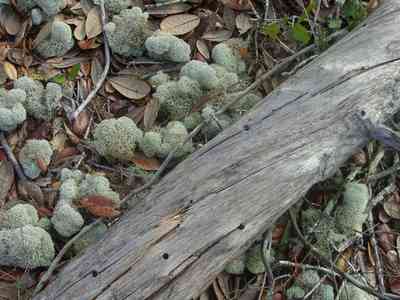 The lichens are like puff balls was they absorb water. Under dry conditions, the same lichens flatten and become dry and brittle.
 -
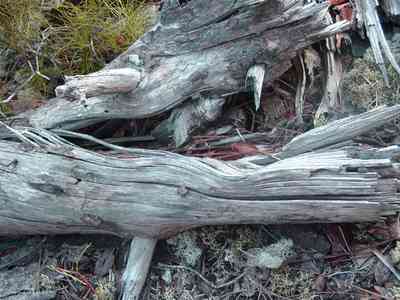 Pine branches forms litter the forest floor.
 -
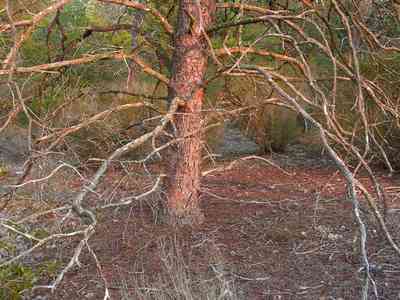 Some of the sand pines have pinwheel shapes.
 -
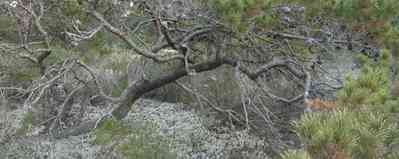 Lichen grow in shaded areas of the sand scrub forest.
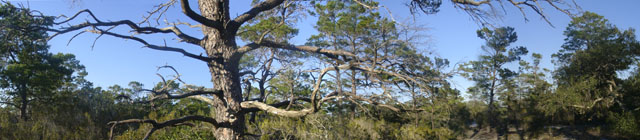
What's Nearby?
 Perdido Key: 3453 Nighthawk Lane (0 feet)
 Perdido Key: Sharp Reef Drive (12 feet)