 One Tank of Gas
This article is licensed under the GNU Free Documentation License. It uses material from Roy Hyatt Environmental Center-an electronic trip.
Cantonment:
Roy Hyatt Environmental Center Dog Trot House
Cantonment: Roy Hyatt Environmental Center Dog Trot House
The Center provides field trips which focus upon wetlands, life on a 19th century dogtrot home and schoolhouse, the natural history museum, the pollution/recycling museum, the school bus bird blind, trail tours, and the microscope laboratory.
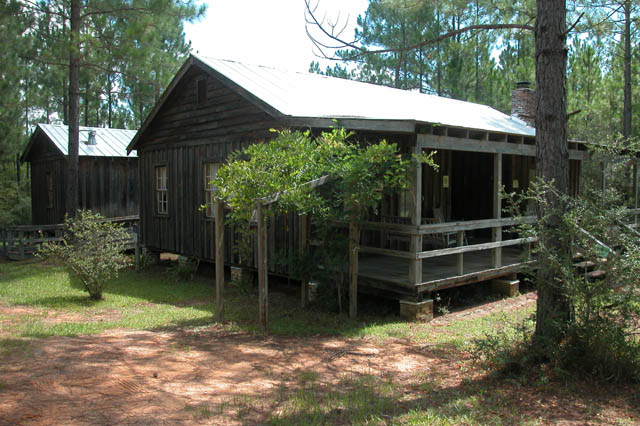
Dog trot homes were constructed from the early 1800's through the 1930's, mainly in the Southeastern United States, using logs, lumber, stone and brick. Construction of the house took place in 1988 by students and teachers of the evening carpentry and masonry classes of the George Stone Vocational-Technical School. The original home no longer exists.
Many of the furnishings were donated by Dr. Betty Hyatt, wife of Roy. The rest of the furnishings were purchased with donations from members of the Environmental Studies Center Associates and Friends of the Center.
-
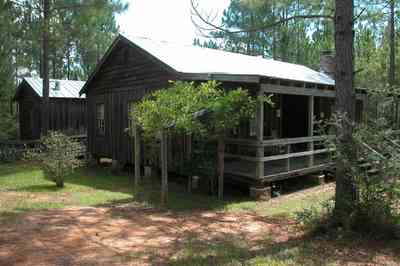 This is a typical Cracker homestead. Cracker refers to the unpretentious people and architecture found on farms and in rural communities still sprinkled throughout the Florida peninsula and panhandle wetlands.
 -
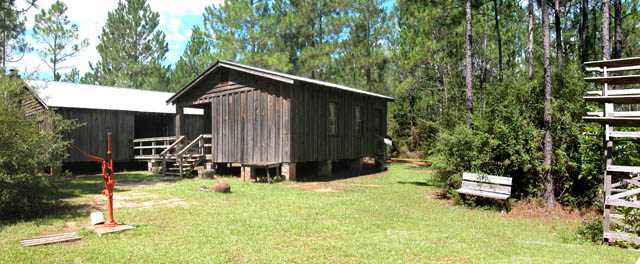
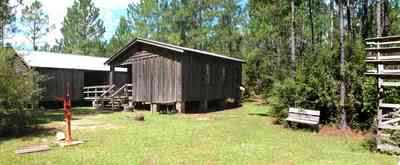 A separate kitchen structure was built out back to isolate the heat of cooking and the hazards of fire.
 -
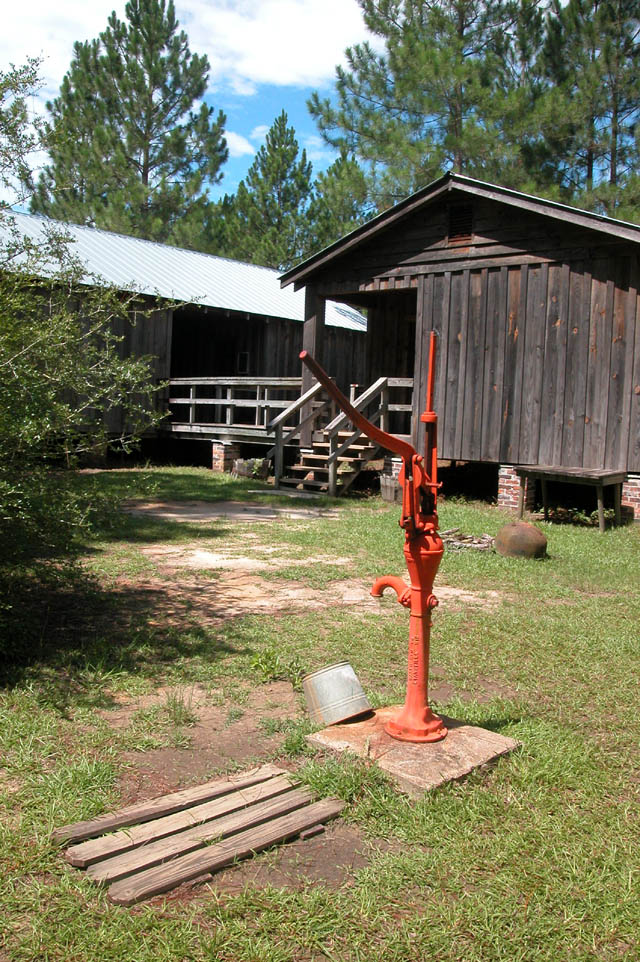
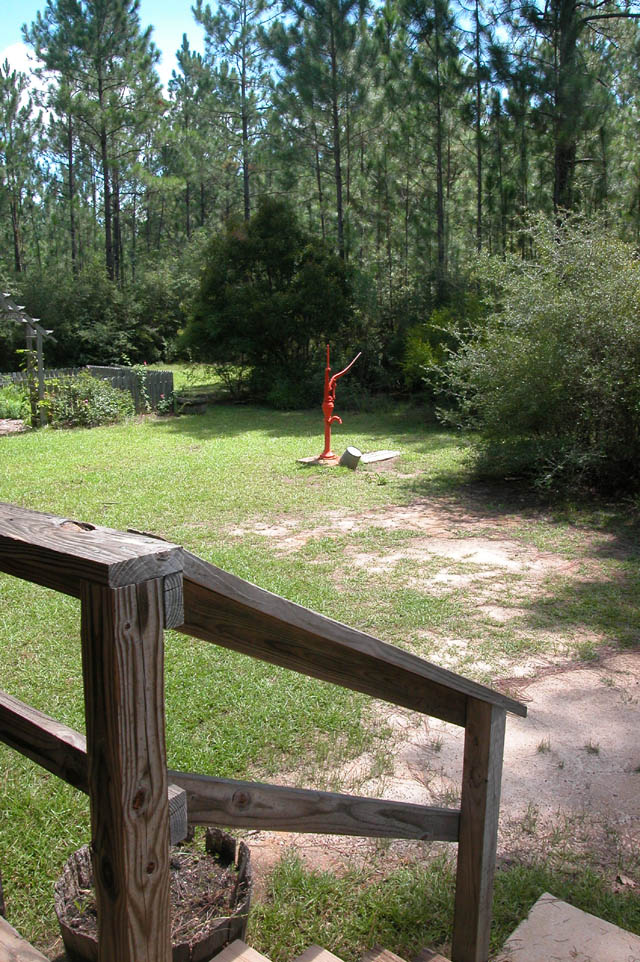
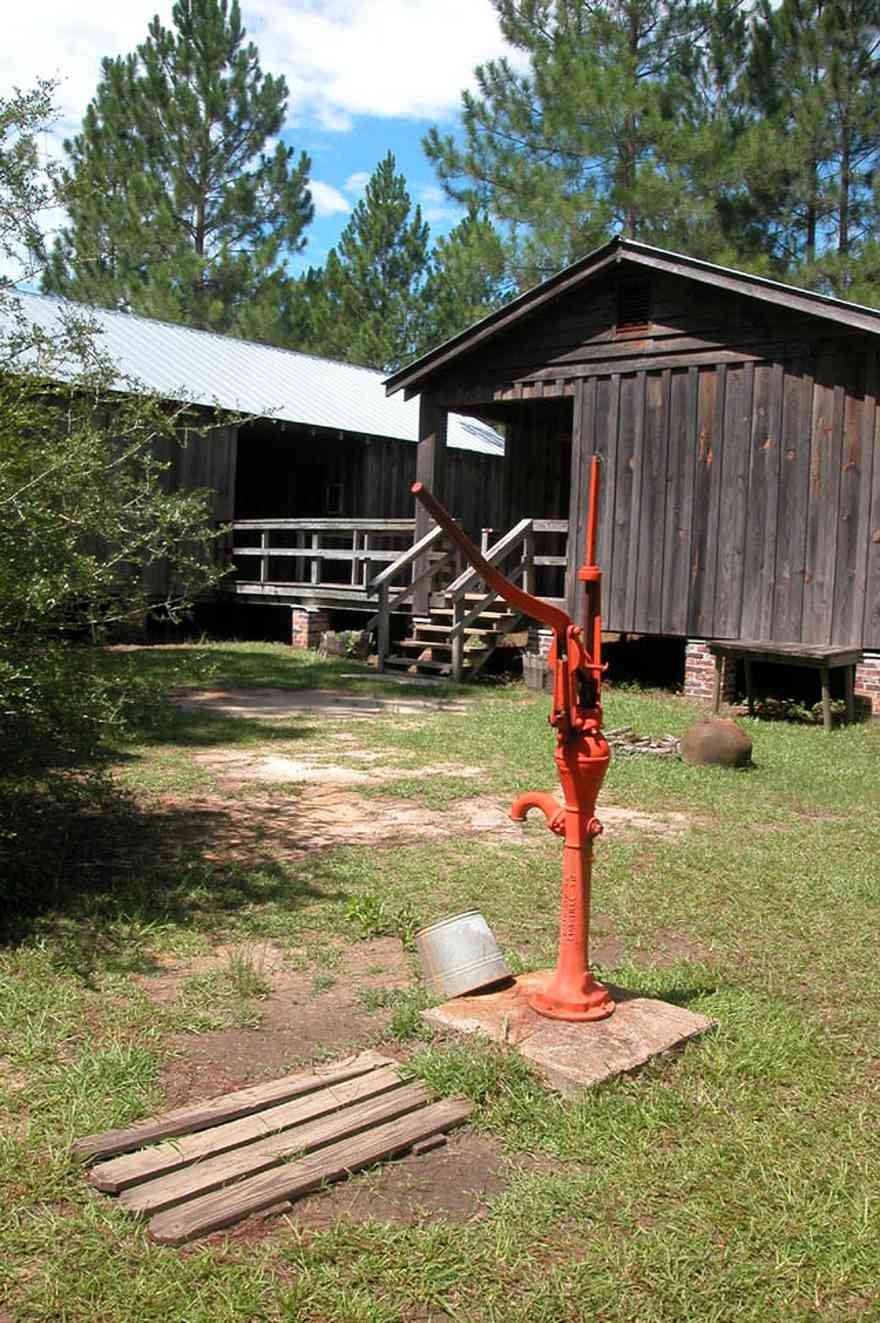 Water was pumped by hand. The well was dug at the rear of the house adjacent to the kitchen.
 -
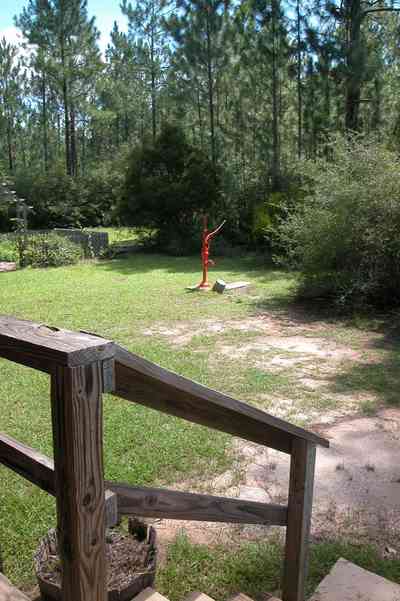 The pump is set just off the back of the main house.
 -
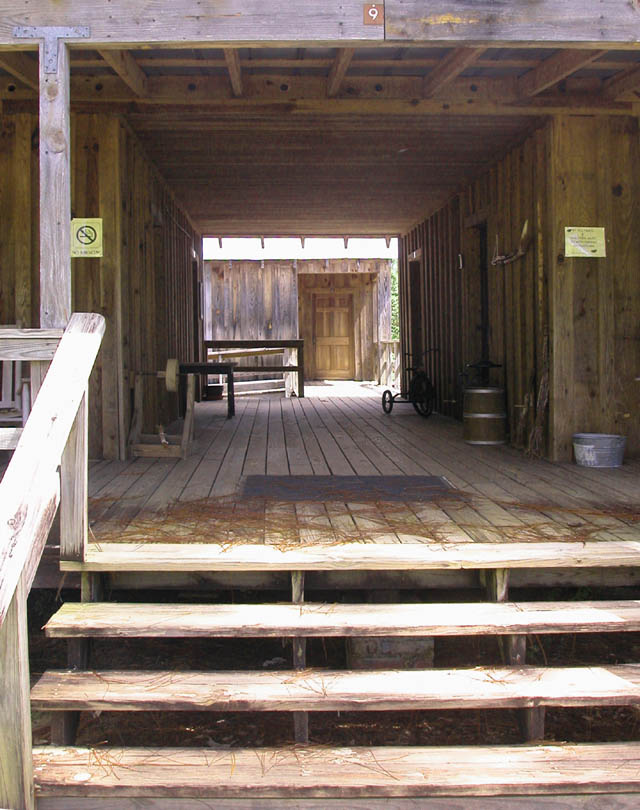
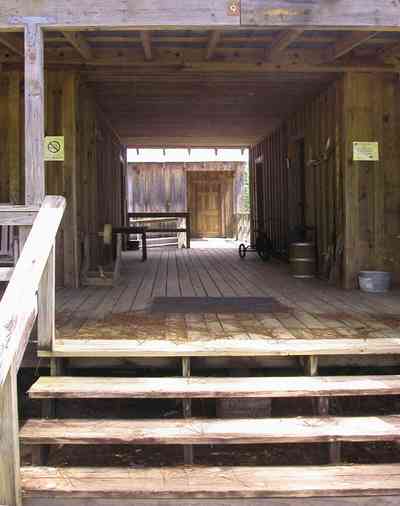 With broad porches and this "dog trot" breezeway, the interior space was somewhat insulated for direct sunlight. It also served as a sheltered workspace. The kitchen building is at the end of the walkway.
 -
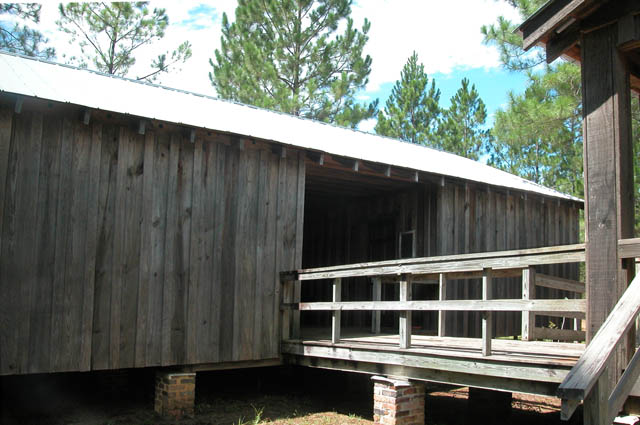
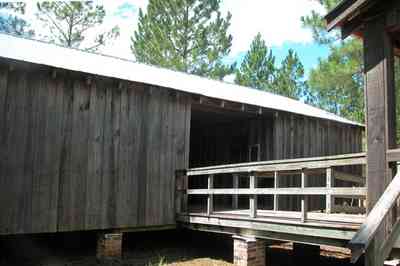 Houses were built high up off the damp ground on piers.
 -
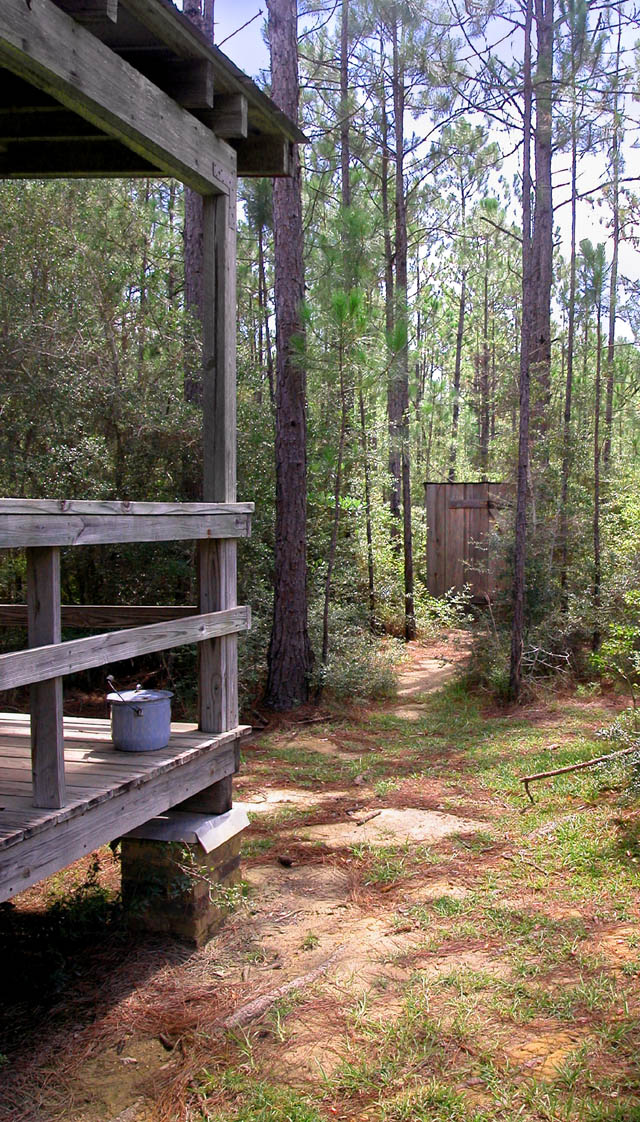
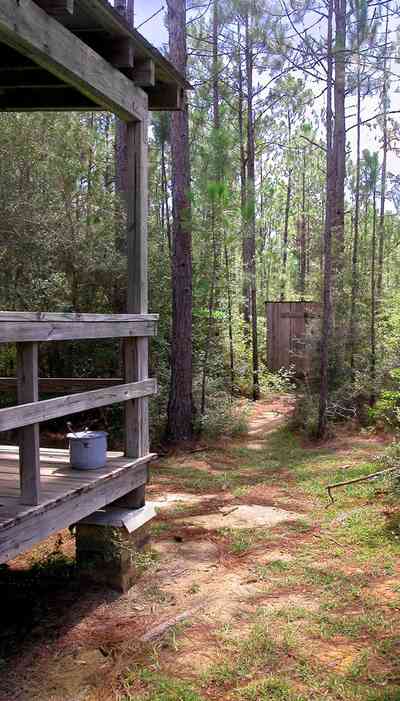 The outhouse can be seen through the trees. Toilets were small wooden buildings commonly with two seating spaces. Unheated, the privy was cold in the wintertime. Waste built up under the seat until it was necessary to move the privy, or construct a new one. At night, women and girls made use of a flanged bucket known asa a slop jar and kept it under their beds. There is a slop jar on the corner of the porch. Indoor plumbing did not come to most farms until the 1930's, 1940's, or 1950's.
 -
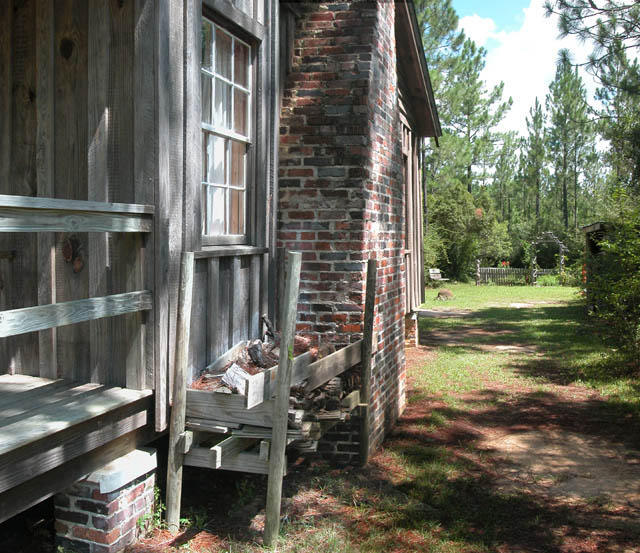
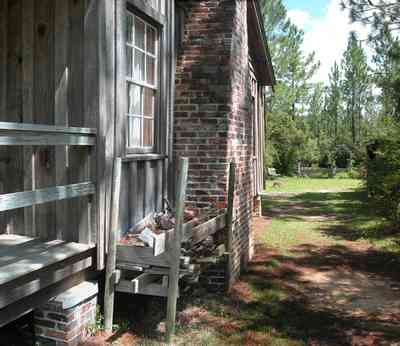 Cracker homesteaders oriented their houses on a north-south axis which maximized solar impact on all three sunny sides. Such a tactic helped to keep the wall dry. Placement of the fireplace and chimney in the north gable end would keep that fourth sunless wall dry as well. In the photograph, the wood is stacked off the ground alongside of the chimney.
 -
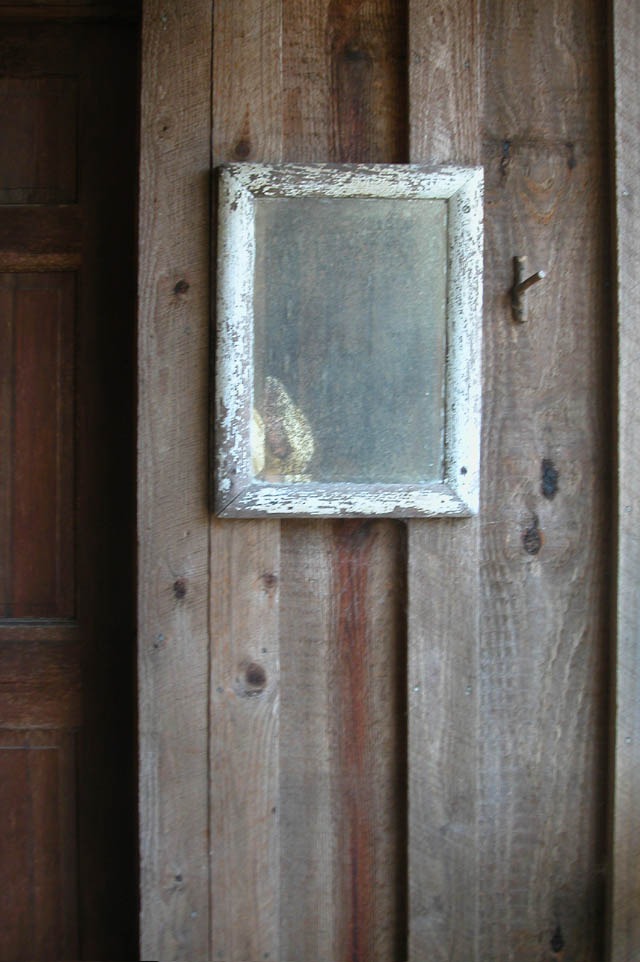
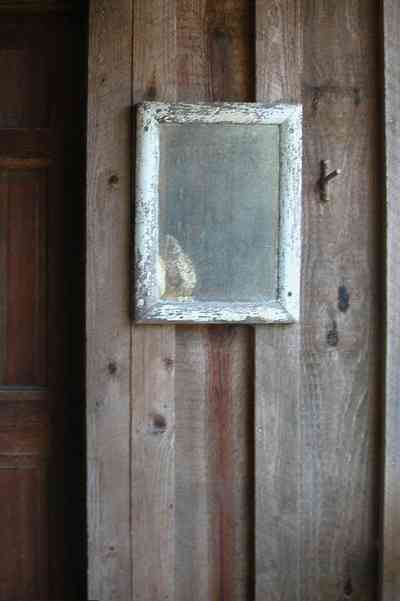 The framed mirror hangs on a wall in the "dog trot" alongside of the kitchen door. It was used for grooming and shaving and was usually the only mirror in the house.
 -
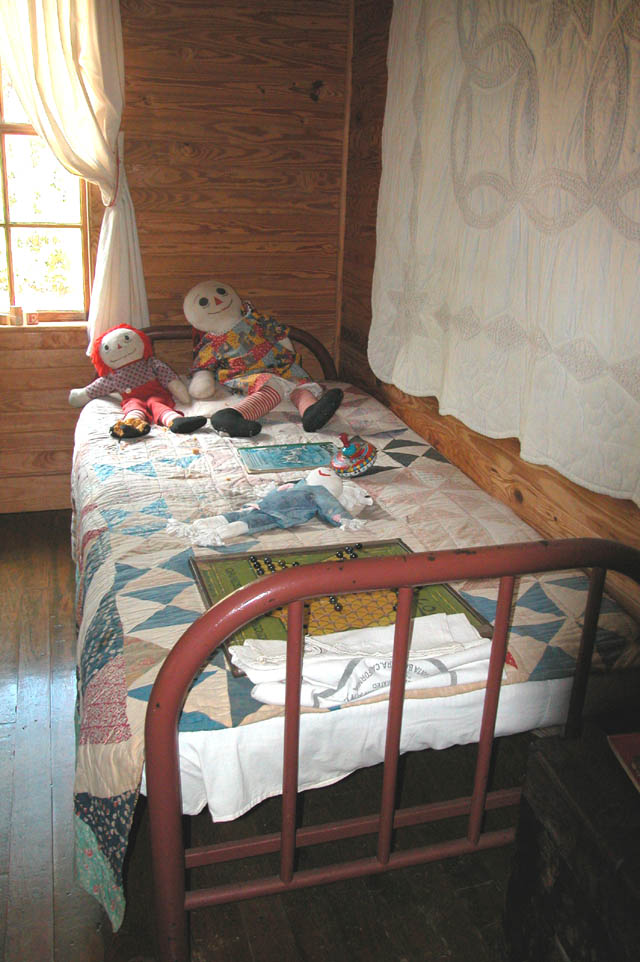
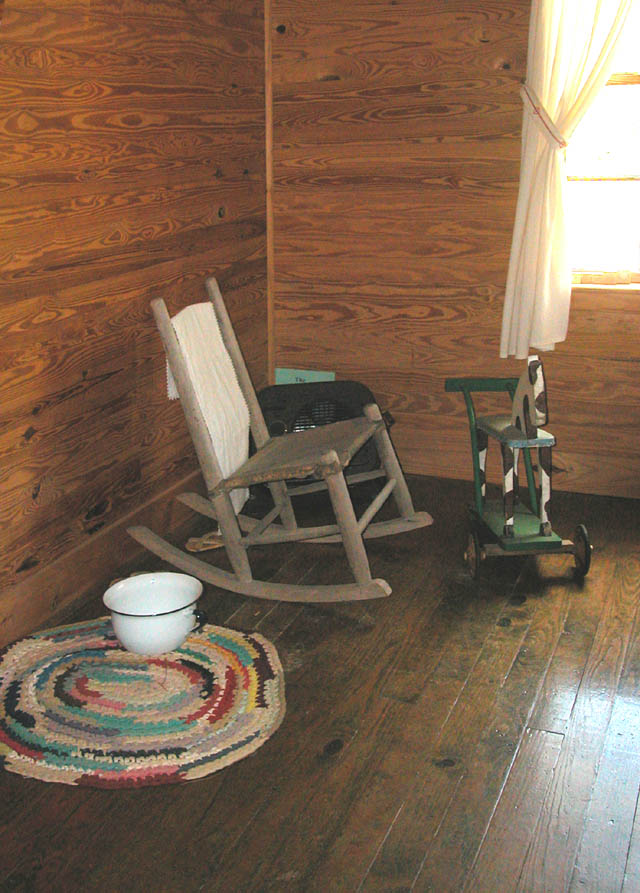
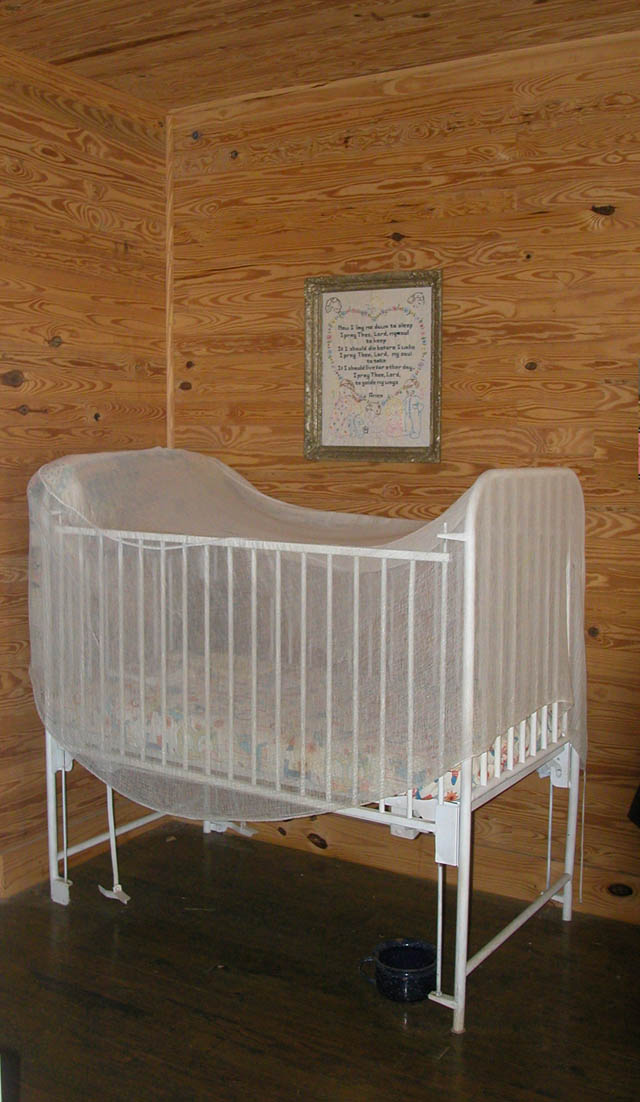
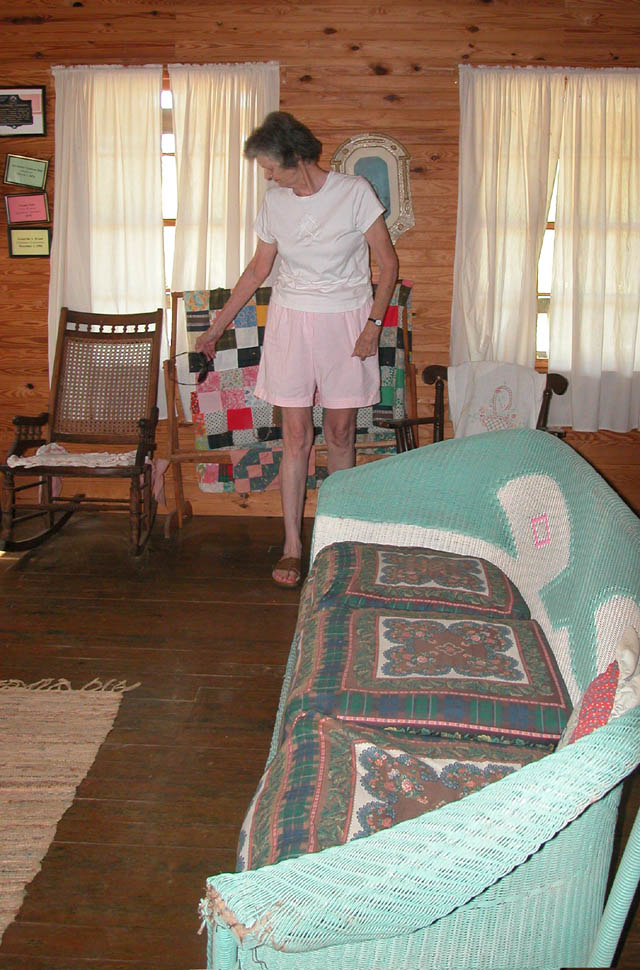
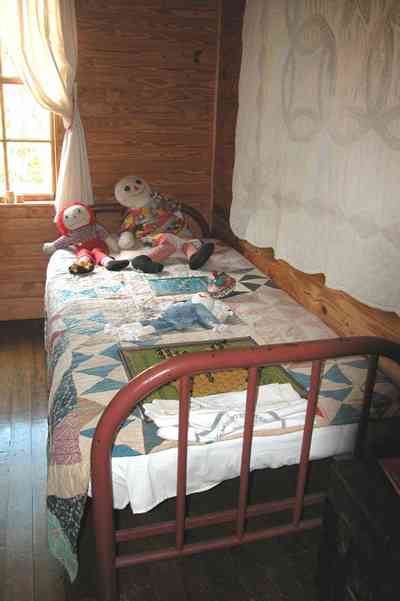 This childrens bedroom was often used as bedroom and living area for the husband or wife's parents. When these people no longer maintained a home, they were welcomed into the home of one of their son's or daughter's, where they lived out their lives, usually contributing to the family by helping to garden and farm, work with livestock, sew and mend, make repairs, sit with the sick or children, advise, teach, prepare home remedies and assist with other tasks.
 -
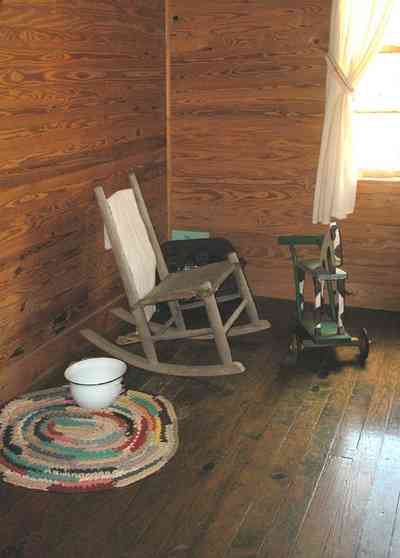 Grandparents were companions to children and advisors to the rest of the family. Many grandparents were excellent storytellers passing on family history, local history, and popular stories which would entertain children and others for hours on end. Some played musical instruments and sang.
 -
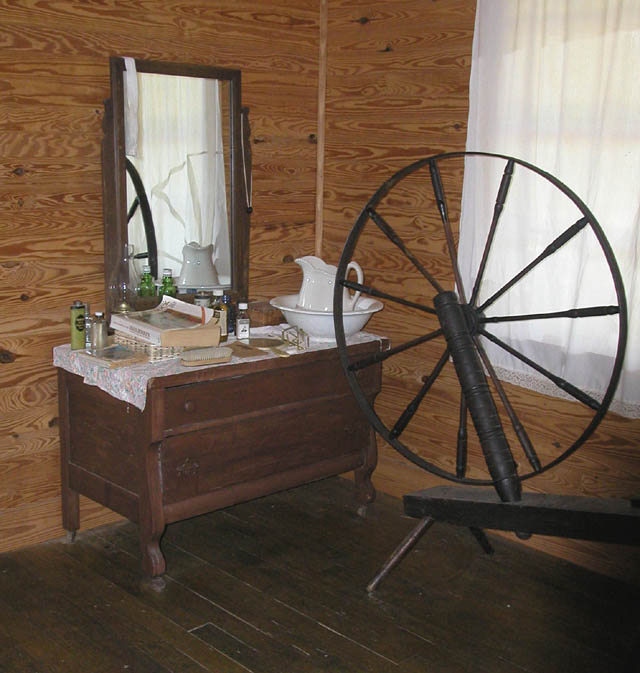
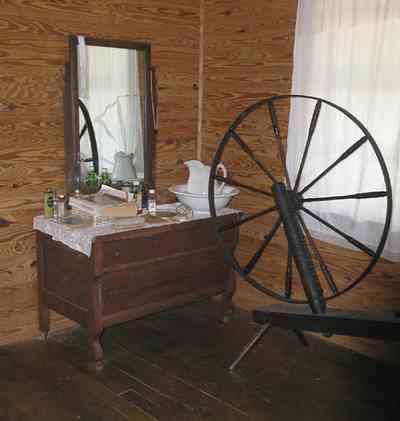 A farm family was a self-sufficent unit. Spinning and weaving was a necessary task.
 -
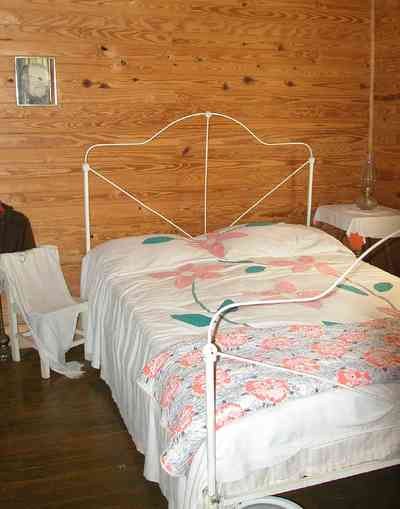 There was a bedroom for male offspring. Boys had to give up their rooms temporarily when overnight guests were present. They slept in the dog trot or on the porch.
 -
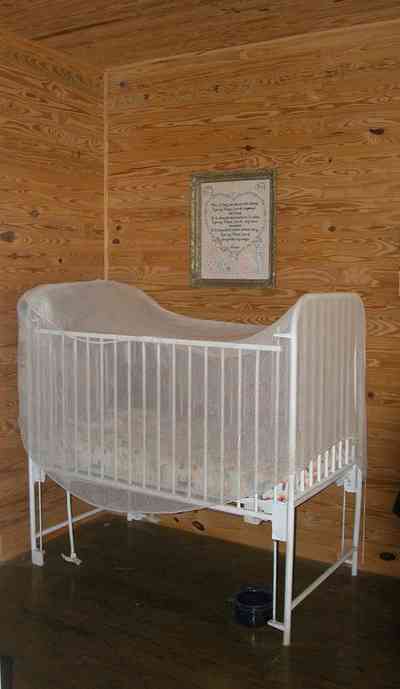 Boys helped with the farm, livestock, and repaired equipment, built fires in the fireplaces during the winter and in kitchen stoves throughout the year. They would hunt and kill game, bring it home and prepare it for cooking.
 -
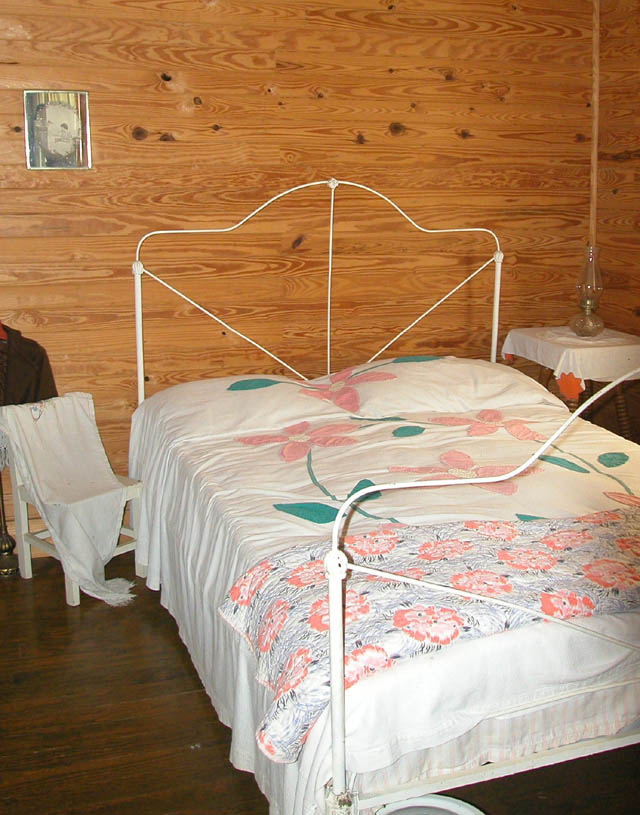
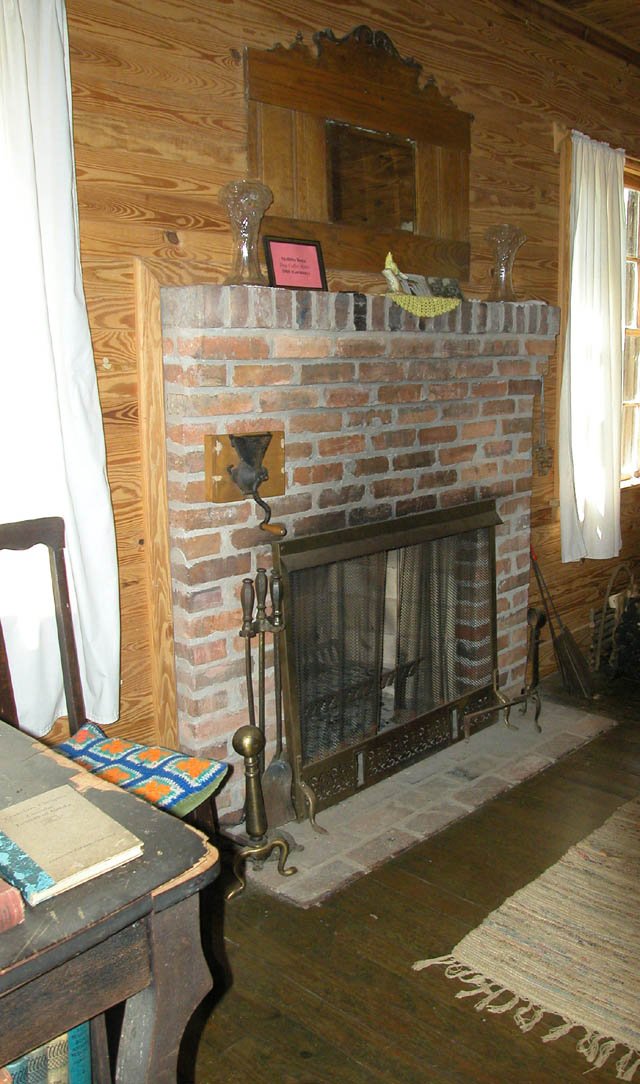
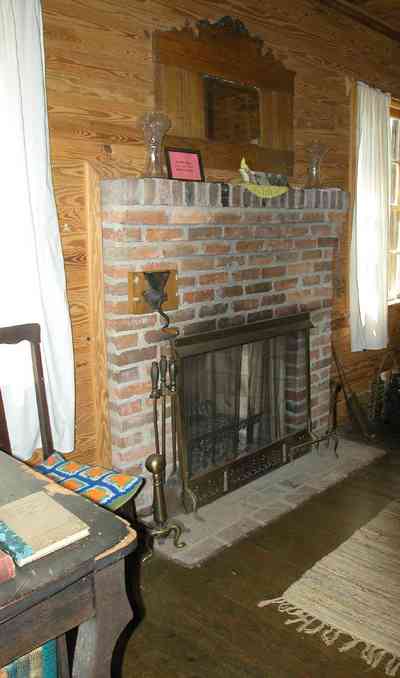 The room with the fireplace was the bedroom and living area for the head of the family and his wife. Fires were built in the fireplace in early morning during winter, usuallly by boys in the family.
 -
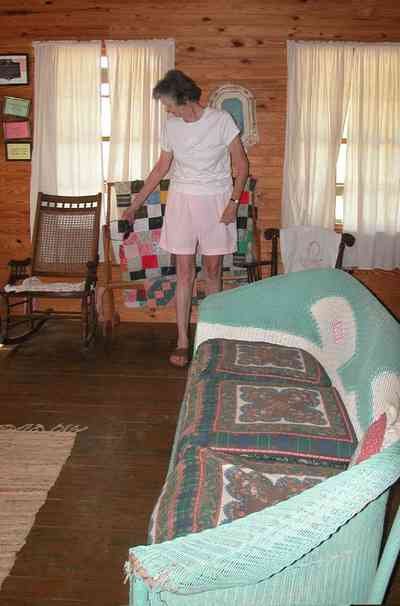 The head of the family laid down the rules. Decisions were made concerning the role of other family members as to work, play, education, spare time, budgeting, and punishment. Due to the size of the family, this room might be shared with other family members.
 -
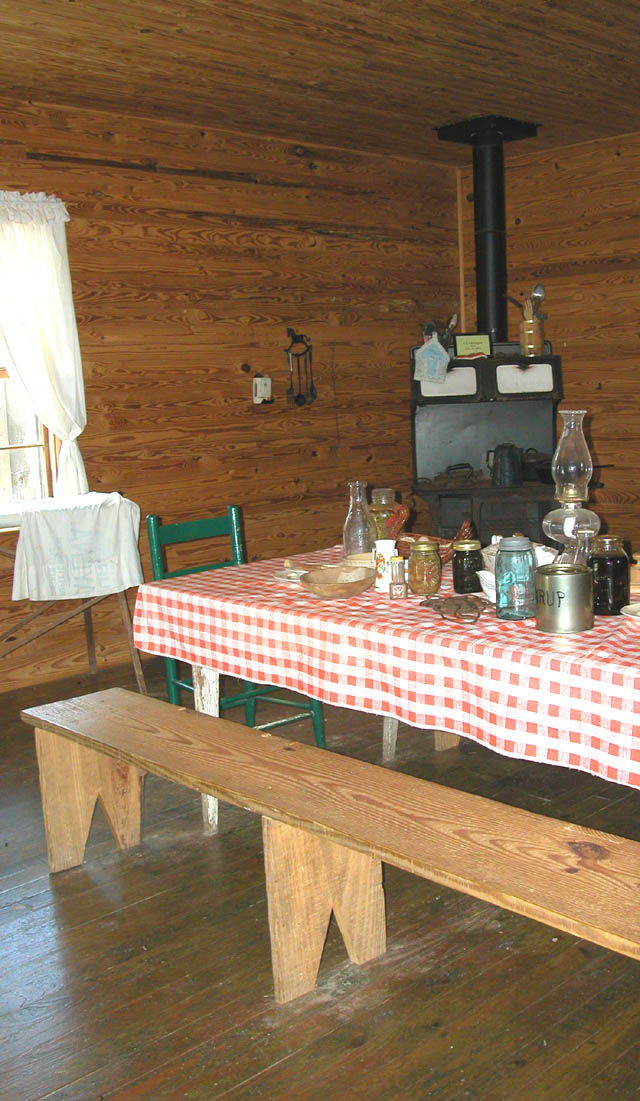
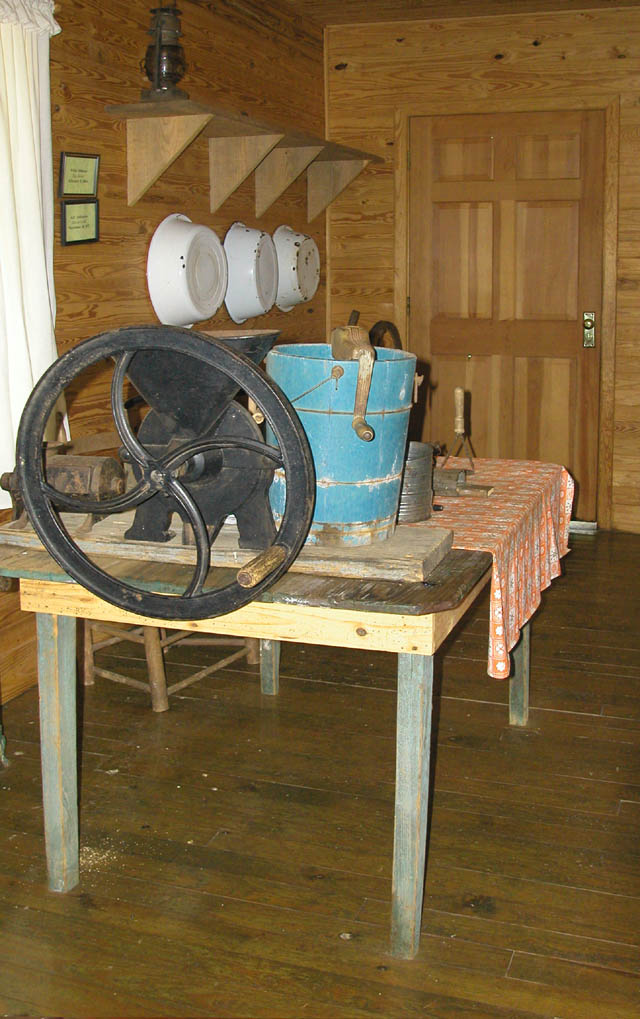
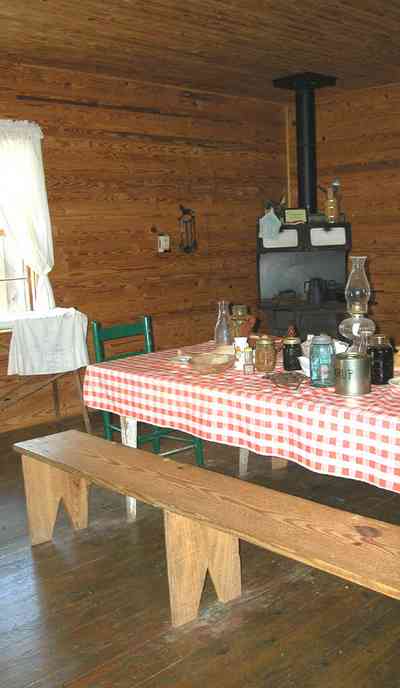 All foods were prepared and consumed in the kitchen-dining area, except for summertime. Preliminary food preparation occurred in the dog trot during this time. The water bucket was kept full for kitchen use.
 -
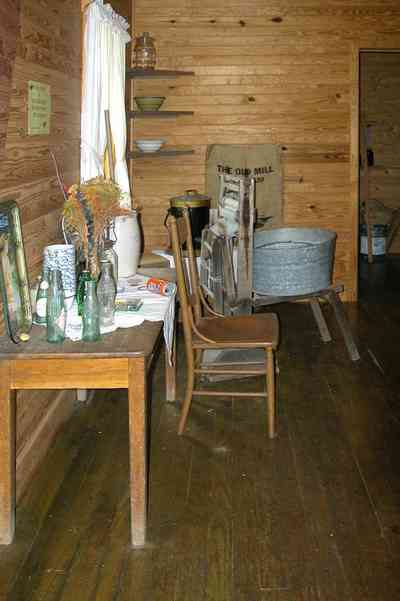 Early in the 20th century many families had ice boxes and a block of ice was kept in it, especially during the summertime. Before this time, milk and butter were kept in a spring box, where it was cooler.
 -
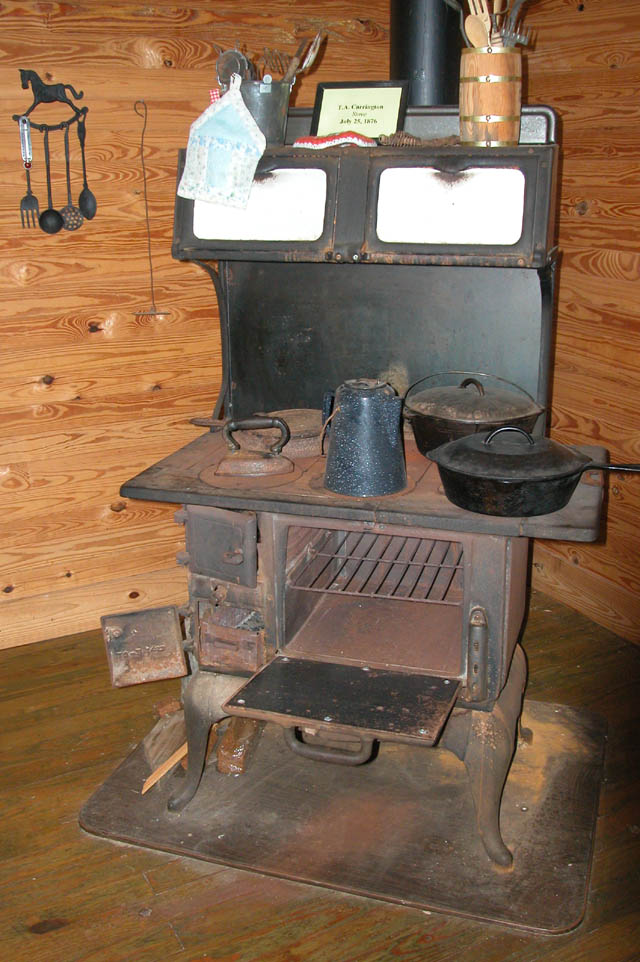
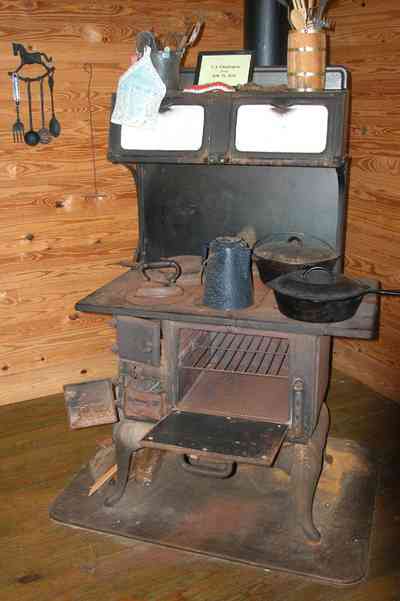 The kitchen was usually equipped with a fireplace in additon to a wood-burning stove.
 -
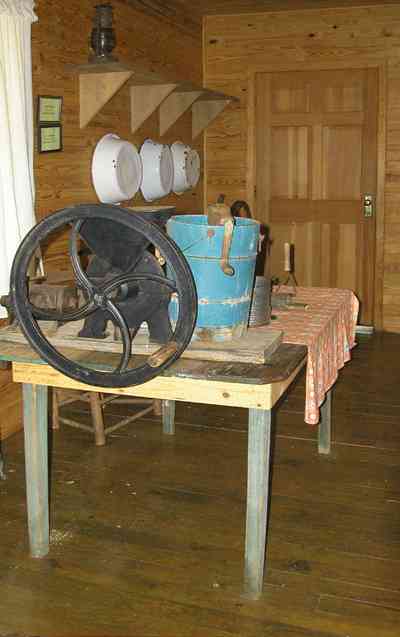 Meals were breakfast, dinner, and supper. At meal times, hands were washed, hats off, grace said, and order and quiet prevaield. Food was passed, everyone, took a share, and was expected to eat what was taken.
 -
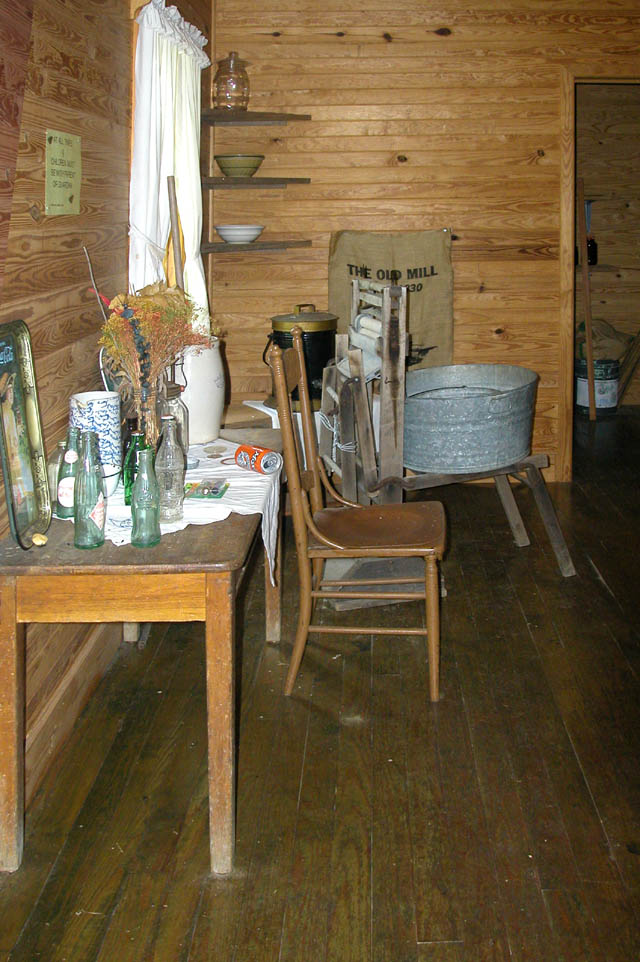
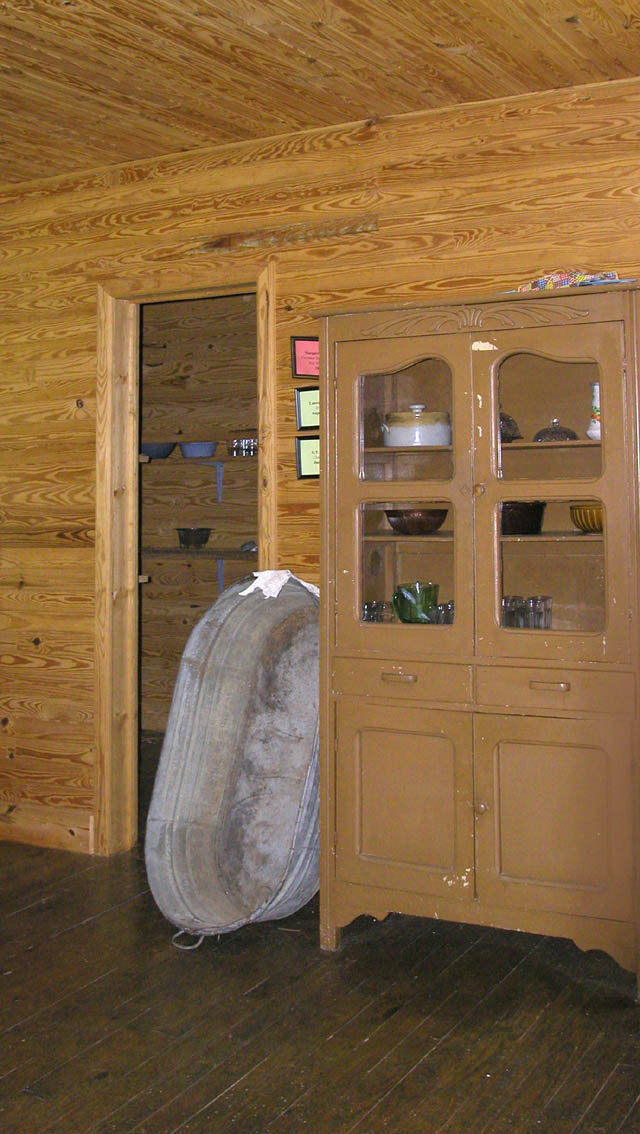
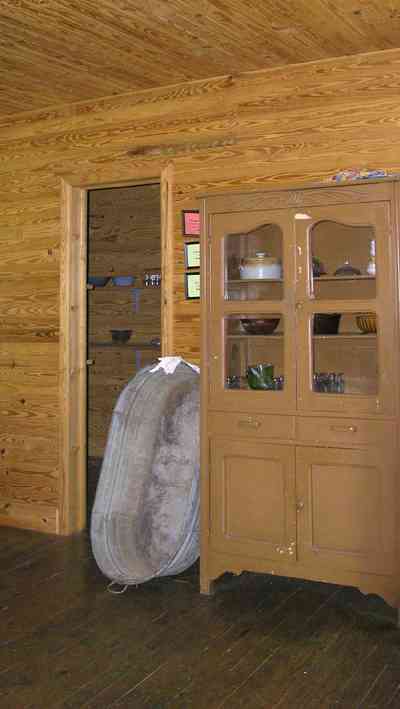 The pantry can be seen through the doorway. It was a storehouse for many kinds of food. There were jars which contained: Preserved fruits and berries; pickled vegetables and meats; lard with bacon slices; vegetables (corn, beans, okra, etc.), nuts, coffee, tea, flour, salt, sugars, pork stored in barrels or brine and wine barrels. Cane syrup was made from evaporating sugar cane juice.
What's Nearby?
 Cantonment: Roy Hyatt Environmental Center Schoolhouse (0 feet)
 Barrineau Park: Farmland (3 miles)
 Cantonment: Milestone (4.5 miles)
 Cantonment: Milestone: Red Brick Mansion B (4.5 miles)
 Cantonment: Milestone: Red Brick Mansion A (4.5 miles)
 Ensley: Hadji Shrine Temple (5.3 miles)
 Pine Forest: Five Flags Speedway (6.5 miles)
 Ensley: JR Jones Ballfield (6.8 miles)
 Barrineau Park: St. Elizabeth Catholic Church (7.4 miles)
 University Of West Florida: Campus (7.9 miles)